Friday, December 2, 2011

Swarovski

Swarovski (English pronunciation: /swɒrˈɒfski/ sworr-off-skee) is the brand name for a range of precisely-cut crystal (a particular type of glass) and related luxury products produced by Swarovski AG of Wattens, Austria. The company is split into two major industry areas, the Swarovski Kristall business unit that primarily works with luxury items and design crystals and the Tyrolit Schleifmittle business unit that is a worldwide leader in the tooling and machinery area.

History

Daniel Swarovski (October 24, 1862 – January 23, 1956), formerly Daniel Swartz, was born in northern Bohemia (now the Czech Republic). His father was a glass cutter who owned a small glass factory. It was there that a young Swarovski served an apprenticeship, becoming skilled in the art of glass-cutting. In 1892 he patented an electric cutting machine that facilitated the production of crystal glass.

In 1895, Swarovski financier Armand Kosman and Franz Weis founded the Swarovski company, originally known as A. Kosmann, Daniel Swartz & Co., which was later shortened to K.S. & Co. The company established a crystal cutting factory in Wattens, Tyrol (Austria), to take advantage of local hydroelectricity for the energy-intensive grinding processes Daniel Swarovski patented.

Products

The Swarovski Crystal range includes crystal glass sculptures and miniatures, jewelry and couture, home decor, and chandeliers.

All sculptures are marked with a logo. The original Swarovski logo was an edelweiss flower, which was replaced by a S.A.L. logo, which was finally replaced with the current swan logo in 1988.

To create crystal glass that lets light refract in a rainbow spectrum, Swarovski coats some of its products with special metallic chemical coatings. Aurora Borealis, or "AB", is one of the most popular coatings, and gives the surface a rainbow appearance. Other coatings are named by the company, Crystal Transmission, Volcano, Aurum, and Dorado. Coatings may be applied to only part of an object; others are coated twice, and thus are designated AB 2X, Dorado 2X etc.

In 2004 Swarovski released Xilion, a copyrighted cut designed to optimise the brilliance of Roses (components with flat backs) and Chatons (diamond cut).

The Swarovski Group also includes Tyrolit (makers of abrasive and cutting tools); Swareflex (reflective and luminous road markings); Signity (synthetic and natural gemstones); and Swarovski Optik (optical instruments such as binoculars and rifle scopes).

The company runs a crystal-themed indoor theme park, Swarovski Kristallwelten (Crystal Worlds) at its original Wattens site (near Innsbruck, Tyrol, Austria). The Crystal Worlds centre is fronted by a glass-covered head, the mouth of which is a fountain. The glass-covered Crystal Worlds houses exhibitions related to, or inspired by, the crystals – but do not include explanations of how the famous designs are made, produced or finished.

Active-Crystals

In 2007 Swarovski formed a partnership with electronics giant Philips to produce the "Active-Crystals" consumer electronics range. This includes six USB Memory keys and four in-ear headphones, and in 2008 they included Bluetooth wireless earpieces for the brand, all with some form of Swarovski crystal on them as decoration.

Figurines and collectibles

Swarovski's figurines are collectible, with a stylized mouse being the very first figurine created. A smaller version of this mouse, now labeled the "replica mouse", is still available. The company produces many types of figurines from ladybugs to limited edition Disney collectibles.

Crystallized – Swarovski Elements crystals were included in some collectible silver coins issued by the Royal Canadian Mint in 2009.


Monday, November 21, 2011

Haider Ackermann

Haider Ackermann (born 29 March 1971) is a French designer of ready-to-wear(1) fashion.

Born in Bogotá, Colombia in 1971, he was adopted at the age of nine months by a French Alsatian family. His adoptive father is a mapmaker. Haider Ackermann spent his childhood in Ethiopia, Chad, Algeria and France before the family moved to the Netherlands.

Inspired by the work of Yves Saint Laurent, he went to Belgium in 1994 and took courses in fashion design at the Royal Academy of Fine Arts in Antwerp. After five months of internship with John Galliano, he worked as an assistant to one of his teachers, the Belgian designer Wim Neels. In the following years he worked for various brands, including Bernhard Willhelm and Patrick Van Ommeslaeghe before working as a designer for Mayerline.

In 2001 Ackermann created his own label and presented his first womens wear collection in March 2001 during Paris fashion week. His 2002 collection drew the attention of house Ruffo, premium leather clothing specialist, which hired him to direct the spring-summer collections and autumn-winter 2003 for Ruffo Research. In 2005 he signed with the Belgian group bvba 32 and set up his studio in Paris.

Ackermann was one of the designers approached to succeed Galliano at Dior, after declining the proposed succession of Martin Margiela. Karl Lagerfeld saw him to be his ideal successor at Chanel,[3] and some commentators called him a "new Yves Saint-Laurent".

Influenced by cultural differences, Ackermann's fashion contrasts and blends dress codes. The simple cuts of his creations are often asymmetric and sewn of different materials, resolutely modern, dynamic and urban areas, using the resources of the high and low culture, developing type clothing streetwear featuring feminine silhouettes sophisticated and refined. His creations have been worn by Tilda Swinton, Penelope Cruz, Victoria Beckham and Janet Jackson.

1) Ready-to-wear or prêt-à-porter (pronounced: [pʁɛ.ta pɔʁ.te]; often abbreviated RTW; "off-the-rack" or "off-the-peg" in casual use) is the term for factory-made clothing, sold in finished condition, in standardized sizes, as distinct from made to measure or bespoke clothing tailored to a particular person's frame. Off-the-peg is sometimes used for items which are not clothing.

Ready-to-wear has rather different connotations in the spheres of fashion and classic clothing. In the fashion industry, designers produce ready-to-wear clothing intended to be worn without significant alteration, because clothing made to standard sizes fits most people. They use standard patterns, factory equipment, and faster construction techniques to keep costs low, compared to a custom-sewn version of the same item. Some fashion houses and fashion designers produce mass-produced and industrially manufactured ready-to-wear lines, while others offer garments that, while not unique, are produced in limited numbers.

Fashion houses that produce a women's haute couture line, such as Chanel, Dior, and Lacroix also produce a ready-to-wear line, which returns a greater profit due to the higher volume turnover of garments and greater availability of the clothing. Relative to couture, ready-to-wear clothing is often more practical and informal, though this may not always be the case. The construction of ready-to-wear clothing is also held to different standard than that of haute couture due to its industrial nature. High-end ready-to-wear lines are sometimes based upon a famous gown or pattern that is then duplicated and advertised to raise the visibility of the designer. Bespoke is custom tailored clothing.

In high-end fashion, ready-to-wear collections are usually presented by fashion houses each season during a period known as Fashion Week. This takes place on a city-wide basis, and the most prominent of these include London, New York, Milan and Paris, and are held twice a year- the Fall/Winter shows take place in February, whilst Spring/Summer collections are shown in September. Smaller lines including the Cruise and Pre-Fall collections, which add to the retail value of a brand, are presented separately at the designer's discretion. Ready-to-wear fashion weeks occur separately and earlier than those of haute couture.

Sunday, October 30, 2011

Textile in fashion

A textile or cloth is a flexible woven material consisting of a network of natural or artificial fibres often referred to as thread or yarn. Yarn is produced by spinning raw fibres of wool, flax, cotton, or other material to produce long strands. Textiles are formed by weaving, knitting, crocheting, knotting, or pressing fibres together (felt).
The words fabric and cloth are used in textile assembly trades (such as tailoring and dressmaking) as synonyms for textile. However, there are subtle differences in these terms in specialized usage. Textile refers to any material made of interlacing fibres. Fabric refers to any material made through weaving, knitting, spreading, crocheting, or bonding that may be used in production of further goods (garments, etc.). Cloth may be used synonymously with fabric but often refers to a finished piece of fabric used for a specific purpose (e.g., table cloth).

Uses

Textiles have an assortment of uses, the most common of which are for clothing and containers such as bags and baskets. In the household, they are used in carpeting, upholstered furnishings, window shades, towels, covering for tables, beds, and other flat surfaces, and in art. In the workplace, they are used in industrial and scientific processes such as filtering. Miscellaneous uses include flags, backpacks, tents, nets, cleaning devices such as handkerchiefs and rags, transportation devices such as balloons, kites, sails, and parachutes, in addition to strengthening in composite materials such as fibreglass and industrial geotextiles. Children can learn using textiles to make collages, sew, quilt, and toys.
Textiles used for industrial purposes, and chosen for characteristics other than their appearance, are commonly referred to as technical textiles. Technical textiles include textile structures for automotive applications, medical textiles (e.g. implants), geotextiles (reinforcement of embankments), agrotextiles (textiles for crop protection), protective clothing (e.g. against heat and radiation for fire fighter clothing, against molten metals for welders, stab protection, and bullet proof vests). In all these applications stringent performance requirements must be met. Woven of threads coated with zinc oxide nanowires, laboratory fabric has been shown capable of "self-powering nanosystems" using vibrations created by everyday actions like wind or body movements.

Sources and types

Textiles can be made from many materials. These materials come from four main sources: animal (wool, silk), plant (cotton, flax, jute), mineral (asbestos, glass fibre), and synthetic (nylon, polyester, acrylic). In the past, all textiles were made from natural fibres, including plant, animal, and mineral sources. In the 20th century, these were supplemented by artificial fibres made from petroleum.
Textiles are made in various strengths and degrees of durability, from the finest gossamer to the sturdiest canvas. The relative thickness of fibres in cloth is measured in deniers. Microfibre refers to fibres made of strands thinner than one denier.

Mineral textiles
Asbestos and basalt fibre are used for vinyl tiles, sheeting, and adhesives, "transite" panels and siding, acoustical ceilings, stage curtains, and fire blankets.
Glass fibre is used in the production of spacesuits, ironing board and mattress covers, ropes and cables, reinforcement fibre for composite materials, insect netting, flame-retardant and protective fabric, soundproof, fireproof, and insulating fibres.
Metal fibre, metal foil, and metal wire have a variety of uses, including the production of cloth-of-gold and jewelery. Hardware cloth (US term only)is a coarse weave of steel wire, used in construction.

Animal textiles
Animal textiles are commonly made from hair fur or skin.
Wool refers to the hair of the domestic goat or sheep, which is distinguished from other types of animal hair in that the individual strands are coated with scales and tightly crimped, and the wool as a whole is coated with a wax mixture known as lanolin (aka wool grease), which is waterproof and dirtproof. Woollen refers to a bulkier yarn produced from carded, non-parallel fibre, while worsted refers to a finer yarn which is spun from longer fibres which have been combed to be parallel. Wool is commonly used for warm clothing. Cashmere, the hair of the Indian cashmere goat, and mohair, the hair of the North African angora goat, are types of wool known for their softness.
Other animal textiles which are made from hair or fur are alpaca wool, vicuña wool, llama wool, and camel hair, generally used in the production of coats, jackets, ponchos, blankets, and other warm coverings. Angora refers to the long, thick, soft hair of the angora rabbit.
Wadmal is a coarse cloth made of wool, produced in Scandinavia, mostly 1000~1500CE.
Silk is an animal textile made from the fibres of the cocoon of the Chinese silkworm. This is spun into a smooth, shiny fabric prized for its sleek texture.

Plant textiles
Grass, rush, hemp, and sisal are all used in making rope. In the first two, the entire plant is used for this purpose, while in the last two, only fibres from the plant are utilized. Coir (coconut fibre) is used in making twine, and also in floormats, doormats, brushes, mattresses, floor tiles, and sacking.
Straw and bamboo are both used to make hats. Straw, a dried form of grass, is also used for stuffing, as is kapok.
Fibres from pulpwood trees, cotton, rice, hemp, and nettle are used in making paper.
Cotton, flax, jute, hemp, modal and even bamboo fibre are all used in clothing. Piña (pineapple fibre) and ramie are also fibres used in clothing, generally with a blend of other fibres such as cotton. Nettles have also been used to make a fibre and fabric very similar to hemp or flax. The use of milkweed stalk fibre has also been reported, but it tends to be somewhat weaker than other fibres like hemp or flax.
Acetate is used to increase the shininess of certain fabrics such as silks, velvets, and taffetas.
Seaweed is used in the production of textiles. A water-soluble fibre known as alginate is produced and is used as a holding fibre; when the cloth is finished, the alginate is dissolved, leaving an open area
Lyocell is a man-made fabric derived from wood pulp. It is often described as a man-made silk equivalent and is a tough fabric which is often blended with other fabrics – cotton for example.
Fibres from the stalks of plants, such as hemp, flax, and nettles, are also known as 'bast' fibres.

Synthetic textiles
All synthetic textiles are used primarily in the production of clothing.
Polyester fibre is used in all types of clothing, either alone or blended with fibres such as cotton.
Aramid fibre (e.g. Twaron) is used for flame-retardant clothing, cut-protection, and armor.
Acrylic is a fibre used to imitate wools, including cashmere, and is often used in replacement of them.
Nylon is a fibre used to imitate silk; it is used in the production of pantyhose. Thicker nylon fibres are used in rope and outdoor clothing.
Spandex (trade name Lycra) is a polyurethane product that can be made tight-fitting without impeding movement. It is used to make activewear, bras, and swimsuits.
Olefin fibre is a fibre used in activewear, linings, and warm clothing. Olefins are hydrophobic, allowing them to dry quickly. A sintered felt of olefin fibres is sold under the trade name Tyvek.
Ingeo is a polylactide fibre blended with other fibres such as cotton and used in clothing. It is more hydrophilic than most other synthetics, allowing it to wick away perspiration.
Lurex is a metallic fibre used in clothing embellishment.
Milk proteins have also been used to create synthetic fabric. Milk or casein fibre cloth was developed during World War I in Germany, and further developed in Italy and America during the 1930s. Milk fibre fabric is not very durable and wrinkles easily, but has a pH similar to human skin and possesses anti-bacterial properties. It is marketed as a biodegradable, renewable synthetic fibre.
Carbon fibre is mostly used in composite materials, together with resin, such as carbon fibre reinforced plastic. The fibres are made from polymer fibres through carbonization.


Saturday, October 22, 2011

Versace

Gianni Versace S.p.A. (Italian pronunciation: [ˈdʒanni veɾˈsaːʧe]), usually referred to as Versace, is an Italian fashion label founded by Gianni Versace in 1978.
The first Versace boutique was opened in Milan's Via della Spiga in 1978, (though the Versace family are from Reggio Calabria) and its popularity was immediate. Today, Versace is one of the world's leading international fashion houses. Versace designs, markets and distributes luxury clothing, accessories, fragrances, makeup and home furnishings under the various brands of the Versace Group. In 1994, the brand became a household name after the widespread coverage of the Black Versace dress of Elizabeth Hurley.
Gianni Versace was killed by Andrew Cunanan on July 15, 1997. His sister Donatella Versace, formerly vice-president, then stepped in as creative director of Versace and his older brother Santo Versace became CEO. Donatella's daughter Allegra Versace also owns 50 percent of the company since 2004 as wished by Gianni in his last will. Allegra also has the last say of the sale and other important details in the Versace clothing line.
Versace's Style Department employs a group of designers and stylists who work in teams. Each team is specifically dedicated to each fashion line or label. These teams operate under the close supervision and guidance of Donatella Versace.

Versace lines

There are several lines which make up Versace: Atelier Versace, Versace Couture, Versace Sports, Versace Jeans Couture, Versace Home Collection, Versace Collection, and Versus (Versace). In addition to clothing and accessories, it also operates a hotel, the Palazzo Versace.
Versace Couture, which contains high-end, often handmade apparel, jewelry, watches, fragrances, cosmetics, handbags, shoes, and home furnishings, is the house's main line. Traditionally, this is the only line presented on the runway which is shown during Milan's fashion week, but this has not been strictly the case in recent years. Couture dresses in this line may cost about $10,000 and suits cost approximately $5,000. Donatella Versace directly heads this line and designs a vast amount of the items. The other Versace label named Versace Collection which includes designs by Joshua Rankin-Kells, and again overseen by Donatella Versace, is the second high-end line of the group and is designed toward younger more fashioned people, the logo is discreet and consist in a hollowed V surrounded by the classic Greek frieze or is signed in all word with the word "collection" written smaller in black at the bottom line of the name Versace in hollowed letters or in white. The Versace Sport line was stopped in 2008 due to large counterfacting of this line, damaging the Versace group image.
Versace Jeans Couture, a casual clothing line, focuses on informal clothing and high-end denim and classic Versace print shirts. It is readily available and comparably affordable, but has been discontinued from the United States for the most part. This line is distributed through 56 boutiques and flagship stores, and 1800 multi-brand points of sale, including Internet-based shops. Versace Sport encompassed active wear and accessories. The name was often printed on t-shirts.

Versace precious items

Gianni Versace and Frank Muller launched the first Versace watch collection line in 1994. The name of the first collection was Atelier and it became a must among fashionistas and Versace brand lovers.
Since then, the collection of Versace timepieces has evolved and the range of products of the Medusa fashion brand has greatly been expanded.
Versace watches line is produced under license agreement in Switzerland. Timex Group bought the license in 2005 but the Versace watch line is still produced and operated from Switzerland by Vertime SA.
Since the discontinuation of the Atelier collection a new line from the Italian fashion house, Versace Precious Items evolved. The collection includes watches, fine jewelry, and writing instruments.
Lamborghini Murcielago Versace had agreed to make the first ever designer car in the world in the make of a white Lamborghini Murcielago all white exterior and interior with all black rims.
In 1984, the Ford Motor Company offered the Versace edition Lincoln Mark VII. It continued into 1985 but was discontinued after that.
In 2010 Versace unveiled the first Versace mobile phone, the Versace unique, also the first ever 'luxury' multi-media, sapphire-crystal touch screen mobile phone. It comes in a variety of colours, from grey mink to hot pink, lilac to pop red, and costs from $5,600 to $16,000, depending on the trims, available in stainless steel or solid gold. The interior software was done by Modelabs and LG. It is hand-assembled in France, and available only in select Versace boutiques.

Wednesday, October 19, 2011

Clothing

Clothing refers to any covering for the human body that is worn. The wearing of clothing is exclusively a human characteristic and is a feature of nearly all human societies. The amount and type of clothing worn depends on functional considerations (such as a need for warmth or protection from the elements) and social considerations. In some situations the minimum amount of clothing (such as covering of a person's genitals) may be socially acceptable, while in others much more clothing is expected.
Clothing can serve as protection from the elements. Clothes can also enhance safety during hazardous activities such as hiking and cooking, by providing a barrier between the skin and the environment. Further, clothes can provide a hygienic barrier, keeping toxins away from the body and limiting the transmission of germs.
Clothing performs a range of social and cultural functions, such as individual, occupational and sexual differentiation, and social status. A uniform, for example, may identify civil authority figures, such as police and military personnel, or it may identify team, group or political affiliations.
In many societies, norms about clothing reflect standards of modesty, religion, gender, and social status. Clothing may also function as a form of adornment and an expression of personal taste or style.
Clothing can and has in history been made from a very wide variety of materials. Materials have ranged from leather and furs, to woven materials, to elaborate and exotic natural and synthetic fabrics.
Not all body coverings are regarded as clothing. Articles carried rather than worn (such as purses), worn on a single part of the body and easily removed (scarves), worn purely for adornment (jewelry), or those that serve a function other than protection (eyeglasses), are normally considered accessories rather than clothing, as are footwear and hats. However, if functional due to local and weather condition and benefits your well being, footwear can be considered clothing.

Cultural aspects

Gender differentiation
In most cultures, gender differentiation of clothing is considered appropriate for men and women. The differences are in styles, colors and fabrics.
In Western societies, skirts, dresses and high-heeled shoes are usually seen as women's clothing, while neckties are usually seen as men's clothing. Trousers were once seen as exclusively male clothing, but are nowadays worn by both genders. Male clothes are often more practical (that is, they can function well under a wide variety of situations), but a wider range of clothing styles are available for females. Males are typically allowed to bare their chests in a greater variety of public places. It is generally acceptable for a woman to wear traditionally male clothing, while the converse is unusual.
In some cultures, sumptuary laws regulate what men and women are required to wear. Islam requires women to wear more modest forms of attire, usually hijab. What qualifies as "modest" varies in different Muslim societies; however, women are usually required to cover more of their bodies than men are. Articles of clothing worn by Muslim women for purposes of modesty range from the headscarf to the burqa.
Men may sometimes choose to wear men's skirts such as togas or kilts, especially on ceremonial occasions. Such garments were (in previous times) often worn as normal daily clothing by men. Compared to men's clothing, women's clothing tends to be more attractive, often intended to be looked at by men.

Social status
In some societies, clothing may be used to indicate rank or status. In ancient Rome, for example, only senators were permitted to wear garments dyed with Tyrian purple. In traditional Hawaiian society only high-ranking chiefs could wear feather cloaks and palaoa or carved whale teeth. Under the Travancore Kingdom of Kerala, (India), lower caste women had to pay a tax for the right to cover their upper body. In China, before the establishment of the republic, only the emperor could wear yellow. History provides many examples of elaborate sumptuary laws that regulated what people could wear. In societies without such laws, which includes most modern societies, social status is instead signaled by the purchase of rare or luxury items that are limited by cost to those with wealth or status. In addition, peer pressure influences clothing choice.

Making clothing

Some human cultures, such as the various people of the Arctic Circle, traditionally make their clothing entirely of prepared and decorated furs and skins. Other cultures supplemented or replaced leather and skins with cloth: woven, knitted, or twined from various animal and vegetable fibers.
Although modern consumers may take the production of clothing for granted, making fabric by hand is a tedious and labor intensive process. The textile industry was the first to be mechanized — with the powered loom — during the Industrial Revolution.
Different cultures have evolved various ways of creating clothes out of cloth. One approach simply involves draping the cloth. Many people wore, and still wear, garments consisting of rectangles of cloth wrapped to fit — for example, the dhoti for men and the sari for women in the Indian subcontinent, the Scottish kilt or the Javanese sarong. The clothes may simply be tied up, as is the case of the first two garments; or pins or belts hold the garments in place, as in the case of the latter two. The precious cloth remains uncut, and people of various sizes or the same person at different sizes can wear the garment.
Another approach involves cutting and sewing the cloth, but using every bit of the cloth rectangle in constructing the clothing. The tailor may cut triangular pieces from one corner of the cloth, and then add them elsewhere as gussets. Traditional European patterns for men's shirts and women's chemises take this approach.
Modern European fashion treats cloth much less conservatively, typically cutting in such a way as to leave various odd-shaped cloth remnants. Industrial sewing operations sell these as waste; home sewers may turn them into quilts.
In the thousands of years that humans have spent constructing clothing, they have created an astonishing array of styles, many of which have been reconstructed from surviving garments, photos, paintings, mosaics, etc., as well as from written descriptions. Costume history serves as a source of inspiration to current fashion designers, as well as a topic of professional interest to costumers constructing for plays, films, television, and historical reenactment.

Tuesday, October 18, 2011

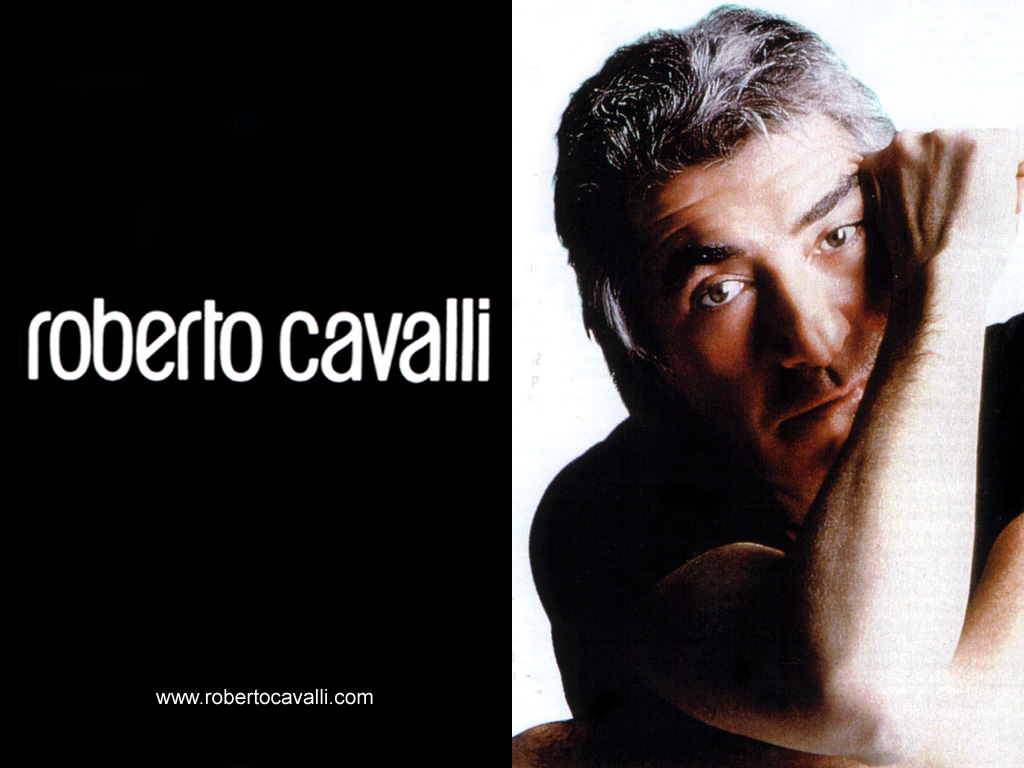
Roberto Cavalli

Biography

Roberto Cavalli was born in Florence, Tuscany. His grandfather, Giuseppe Rossi, was a member of the Macchiaioli Movement, whose work is exhibited in the Uffizi Gallery. Cavalli decided to enroll at the local Art Institute, concentrating in textile print. While still a student, he made a series of flower prints on knit that caught the attention of major Italian hosiery factories.
In the early 1970s, he invented and patented a revolutionary printing procedure on leather, and he started creating patchworks of different materials. He debuted these techniques in Paris, immediately getting commissions from the likes of Hermès and Pierre Cardin. At age 30, he presented his first namesake collection at the Salon for Prêt-à-Porter in Paris. He brought it to the catwalks of the Sala Bianca of Palazzo Pitti in Florence, and later on those of Milano Collezioni jeans made of printed denim, intarsia leathers, brocade and wild prints. He then opened his first boutique in 1972 in Saint-Tropez.
In 1980 Roberto Cavalli married Eva Düringer, who has been his lifelong companion and business partner. In Milan in 1994 Cavalli presented the first sand-blasted jeans. By December of the same year, he had opened boutiques in Saint Barth, in the French Caribbean, followed by others in Venice and Saint-Tropez. Besides the main line, which is sold in over fifty countries worldwide, Roberto Cavalli designs RC Menswear as well as the youth aimed line Just Cavalli, launched in 1998 and comprising today men’s wear, women’s wear and accessories, eyewear, watches, perfumes, underwear and beachwear. There is also the Angels & Devils Children Collection, the Class line, two underwear collections, shoes, eyewear, watches and perfumes. In 2002 Cavalli opened his first café-store in Florence, revamping it with his signature animal prints. This was shortly followed by the opening in Milan of the Just Cavalli café at Torre Branca and another boutique on Via della Spiga.
It was reported in April 2008 that Cavalli had put his business up for sale. Roberto Cavalli was a judge at the Miss Universe 1977 pageant where his future wife ( Eva Duringer) was a contestant. He did not pick her to win. She was first runner-up. The girl that won was the first Black Miss Universe. In July 2011 his company collection was presented at the catwalk of The Brandery fashion show in Barcelona.

Companies

* JUST CAVALLI
* JUST CAVALLI UNDERWEAR & BEACHWEAR
* ROBERTO CAVALLI UNDERWEAR
* CLASS ROBERTO CAVALLI
* ROBERTO CAVALLI nACCESSORI
* ROBERTO CAVALLI ANGELS e ROBERTO CAVALLI DEVILS
* ROBERTO CAVALLI NEONATO
* ROBERTO CAVALLI ANGELS SHOES e ROBERTO CAVALLI DEVILS SHOES
* ROBERTO CAVALLI and JUST CAVALLI EYEWEAR
* ROBERTO CAVALLI TIMEWEAR
* JUST CAVALLI TIME
* ROBERTO CAVALLI e JUST CAVALLI PROFUMI
* ROBERTO CAVALLI VODKA
* J U S T C A V A L L I C L U B
* J U S T C A V A L L I C A F F E’
* CAFFE’ GIACOSA


Friday, October 14, 2011

Fashion design

Fashion design is the art of the application of design and aesthetics or natural beauty to clothing and accessories. It is influenced by cultural and social latitudes, and has varied over time and place. Fashion designers work in a number of ways in designing clothing and accessories. Some work alone or as part of a team. They attempt to satisfy consumer desire for aesthetically designed clothing; and, because of the time required to bring a garment onto the market, must at times anticipate changing consumer tastes.
Fashion designers attempt to design clothes which are functional as well as aesthetically pleasing. They must consider who is likely to wear a garment and the situations in which it will be worn. They have a wide range and combinations of materials to work with and a wide range of colors, patterns and styles to choose from. Though most clothing worn for everyday wear fall within a narrow range of conventional styles, unusual garments are usually sought for special occasions, such as evening wear or party dresses.
Some clothes are made specifically for an individual, as in the case of haute couture. Today, most clothing is designed for the mass market, especially casual and every-day wear.

History

Fashion design is generally considered to have started in the 19th century with Charles Frederick Worth who was the first designer to have his label sewn into the garments that he created. Before the former draper set up his maison couture (fashion house) in Paris, clothing design and creation was handled by largely anonymous seamstresses, and high fashion descended from that worn at royal courts. Worth's success was such that he was able to dictate to his customers what they should wear, instead of following their lead as earlier dressmakers had done. The term couturier was in fact first created in order to describe him. While all articles of clothing from any time period are studied by academics as costume design, only clothing created after 1858 could be considered as fashion design.
It was during this period that many design houses began to hire artists to sketch or paint designs for garments. The images were shown to clients, which was much cheaper than producing an actual sample garment in the workroom. If the client liked their design, they ordered it and the resulting garment made money for the house. Thus, the tradition of designers sketching out garment designs instead of presenting completed garments on models to customers began as an economy.

Types of fashion

Haute couture

Until the 1950s, fashion clothing was predominately designed and manufactured on a made-to-measure or haute couture basis (French for high-fashion), with each garment being created for a specific client. A couture garment is made to order for an individual customer, and is usually made from high-quality, expensive fabric, sewn with extreme attention to detail and finish, often using time-consuming, hand-executed techniques. Look and fit take priority over the cost of materials and the time it takes to make.

Ready-to-wear

Ready-to-wear clothes are a cross between haute couture and mass market. They are not made for individual customers, but great care is taken in the choice and cut of the fabric. Clothes are made in small quantities to guarantee exclusivity, so they are rather expensive. Ready-to-wear collections are usually presented by fashion houses each season during a period known as Fashion Week. This takes place on a city-wide basis and occurs twice a year. The main seasons of Fashion Week include, spring/summer, fall/winter, resort, swim and bridal.

Mass market

Currently the fashion industry relies more on mass market sales. The mass market caters for a wide range of customers, producing ready set by the famous names in fashion. They often wait around a season to make sure a style is going to catch on before producing their own versions of the original look. In order to save money and time, they use cheaper fabrics and simpler production techniques which can easily be done by machine. The end product can therefore be sold much more cheaply.

There is a type of design called "kutch" design originated from the German word "kitschig" meaning "ugly" or "not aesthetically pleasing." Kitsch can also refer to "wearing or displaying something that is therefore no longer in fashion." Often, high-waisted trousers, associated with the 1980s, are considered a "kitsch" fashion statement.

Thursday, October 13, 2011

Donna Karan

From Wikipedia, the free encyclopedia

Donna Karan (born October 2, 1948) is an American fashion designer and the creator of the Donna Karan New York and DKNY clothing labels.

Early life

Karan was born Donna Ivy Faske in Forest Hills, Queens, USA. She grew up in Woodmere, Long Island, New York, with her stepfather, a tailor, and her mother, a model. Karan started selling clothing on Cedarhurst, New York's Central Avenue at age 14.
She graduated from Hewlett High School in 1966, and then went to the Parsons School of Design (later known as Parsons the New School for Design after it became a division of The New School), for two years. She left to work for Anne Klein.

Career

After leaving college, Karan worked for Anne Klein, eventually becoming head of the Anne Klein design-team, where she remained until 1985, when she launched her eponymous Donna Karan label.

Donna Karan International

Karan began her career as an assistant designer with Anne Klein in the late 1960s, where she was eventually promoted to associate designer in 1971. When Anne Klein herself died in 1974, Takihyo Corporation of Japan became the new owner and Karan, together with her former classmate and friend Louis Dell'Ollio, became head designer of the house. In 1984, Karan left Anne Klein and, together with her then husband Stephan Weiss and Takihyo Corporation, started her own business "to design modern clothes for modern people". She showed her first women's clothing collection in 1985.
Karan became well-known for her 'Essentials' line, initially offering seven easy pieces which could all be mixed and matched, and created a fully integrated wardrobe. Karan always insisted that she would only design clothes, like jersey dresses and opaque Lycra tights, that she would also wear herself. She was once described in the early 1990s by the New York Times as “Ed Koch in a stretchy black dress”.
In 1988, Karan, nicknamed The Queen Of Seventh Avenue by the time, extended her women's 'Donna Karan New York' line by a less expensive one for younger women, called DKNY. Two years later, she created DKNY Jeans, a denim-inspired collection. DKNY for men was launched in 1992, one year after the 'Signature' line for men had been presented. In its heyday in the 1990s, the Donna Karan portfolio, for men and women, consisted of the top-of-the-line DKNY collection (black label, couture collection, partly hand-made, limited distribution) and its variation, the 'Donna Karan Signature' collection (golden label, designer sportswear, wider distribution), the DKNY lifestyle diffusion line, and the lower-priced DKNY Jeans (and DKNY Active) lines. The portfolio was later complemented by a children's collection, beauty products, accessories and furniture. Sales rose up to $510.1 million in 1995 from $96.6 in 1991. More than half of the sales were attributed to the DKNY lines, couture contributed 15% and about 30% of the sales were generated by men’s clothing, accessories, cosmetics and other products. Almost a third of the sales were made in exports.

Donna Karan, Inc. and LVMH

In 1997, Donna Karan quit as CEO of the company, but continues to act as chairwoman and designer in charge of the Donna Karan line. From 2002 on, most of the collection was designed by Peter Speliopoulos, a former Cerruti designer, with Karan contributing little subtleties or even entire new creations. The DKNY line is entirely designed by Jane Chung, who has been with Donna Karan since Karan's days with Anne Klein.
In November 2000, the LVMH (Moet Hennessy Louis Vuitton) fashion giant completed the acquisition of both Gabrielle Studio, a company that owned the Donna Karan brand and was named after Karan's daughter, and Donna Karan International Inc. for about $400 million and $240 million, respectively. LVMH subsequently re-arranged the Donna Karan portfolio: 'Donna Karan New York' for men was discontinued, as well as the 'Signature' lines for men and women.
In August 2008, Donna Karan relaunched her discontinued fragrance lines from the 1990s. These include DK Fuel for Men, Signature, Chaos, and Black Cashmere. They are available exclusively in the United States at Saks Fifth Avenue, Bergdorf Goodman, Manhattan and at Harrod's, Knightsbridge, London.

Charity work

Karan is the founder of many charities including, the Urban Zen initiative, which she founded with designer Sonja Nuttall. On March 14 and 15 2008, Karan organized a large sale of her personal belongings and vintage company samples at her late husband's studio to benefit the cause. In October 2008, a foundation run by Karan donated $850,000 to New York's Beth Israel Medical Center. The grant will be used for testing whether yoga, meditation and aromatherapy can enhance the traditional cancer treatments of chemotherapy and radiation.


Wednesday, October 12, 2011

Elie Saab

From Wikipedia, the free encyclopedia

Elie Saab (Arabic: إيلي صعب) (born July 4, 1964), sometimes known simply as 'ES', is a Lebanese fashion designer.

In 1982, Saab launched his Beirut-based fashion label when he was 18 years old. His main workshop is in Lebanon. He also has workshops in Milan and Paris.
Born to Maronite Catholic parents in Beirut, Saab is self-trained. He started sewing as a child and knew that one day he would make a living out of it. In 1981 he moved to Paris to study fashion, but ended up returning and opening his workshop in 1982. In 1997 Saab was the first non-Italian designer to become a member of the Italian Camera Nazionale della Moda, and in 1997, showed his first collection outside Lebanon in Rome. In 1998, he started ready-to-wear in Milan, and in the same year, he held a fashion show in Monaco which was attended by Princess Stéphanie of Monaco.
He became an overnight success after he became the first Lebanese designer to dress an Oscar winner, Halle Berry, in 2002. Berry wore a burgundy gown by Saab to the 2002 Academy Awards when she won for Best Actress. Berry later wore another dress by Saab, this time a gold dress, to the 2003 Oscars.
In May 2003, the Chambre Syndicale de la Haute Couture invited him to become a member, and he showed his first haute couture collection in Paris in July 2003. His first ready-to-wear collection in Paris was the Spring-Summer 2006 collection, and Paris is now his permanent ready-to-wear runway.
His creations can be found all over the world, with boutiques located in Beirut, Paris and London (also in Selfridges and Harrods).
Saab has dressed notable celebrities such as Beyoncé, Aishwarya Rai, Anna Kendrick, Christina Aguilera, Catherine Zeta-Jones, Queen Rania of Jordan Angelina Jolie, Celine Dion, Elena Anaya, Elsa Zylberstein, Victoria, Crown Princess of Sweden, Kristen Stewart, Rihanna and Mila Kunis.

From Us to You :)

1. Don’t try to figure out what will make us happy. We have been trying to get to the bottom of that mystery since the beginning of time and we have no clue either.

2. If we offer you gum, it means we want to kiss you later. It’s not an insult. Just take the gum.

3. Hey – we’re not always aware of our breasts. If we happen to brush up against you, we’re not necessarily coming on to you. Sometimes we are. But it’s not a given.

4. Don’t pretend we don’t tell you when something’s wrong. Come on now. Increased chocolate intake. Foot tapping. crossed arms. Tears during a Hallmark commercial. We’ve said all we need to. Tell us we look even skinnier than usual. And then get us a glass of Sancerre.

5. We love to hear we are beautiful. Breaking it down into specifics is even better.

6. Don’t tell us you’re on a low-carb diet when you take us out to dinner. That’s why we’re not out with our girlfriends.

7. Sometimes we wear our bathing suits when we run out of underwear.

8. We find it creepy when your fingernails are longer and/or shinier than ours. You may get a manicure, but don’t admit it, and don’t enjoy it.

9. Sometimes we just complain about our periods so you’ll leave us alone.

10. Turning into our mothers is an inevitable fear we live with on a daily basis. Calling this to our attention at any point is a terrible idea.

11. Using a GPS is not a sign of weakness.

12. We know we snore sometimes. Don’t ever tell us when we do.

13. Sometimes we bring you to dinners, parties, and events just to be able to say, “That one is mine.” Remember that.

14. A plunger for our place will never be a good gift.

15. When you offer to pay for something and we refuse, insist one more time. Always insist.

16. It’s okay if you want to watch Steel Magnolias with us. But if you cry harder than we do when Shelby dies, you are going to have to start answering some questions.

17. It goes movie, then dinner. That way we don’t have to rush. We have time for dessert.

18. Never pinch the muffin-top. This is grounds for execution.

19. You have our interest if you pick us up in a convertible. You have our hearts if there is a hair tie and/or brush in the car.

20. We want you to have your “guy time.” In fact, if you don’t have a great group of men to hang around, it’s a turn-off.